
Sri Lanka Safari: The Best Guide to Yala National Park (Lodge, Cost, & Gear)
Yala National Park: What You Need to Know
Why Yala National Park?
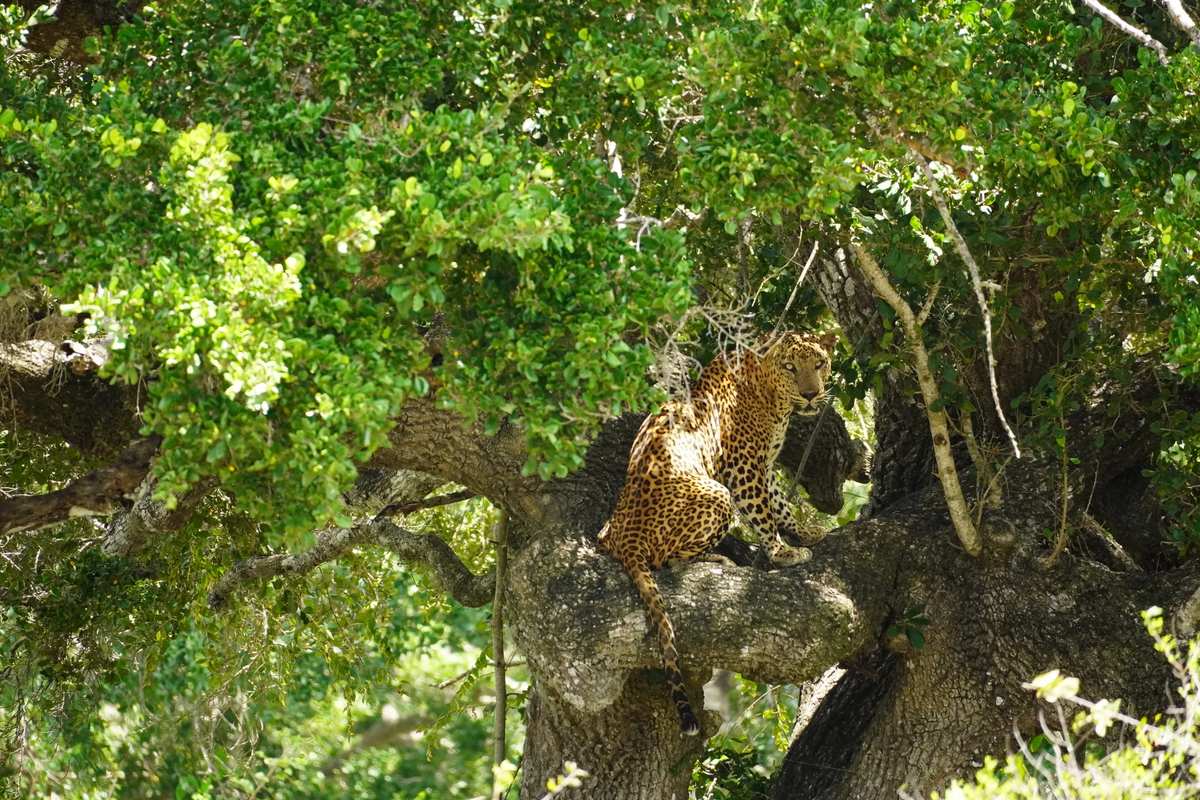
When we were visiting Sri Lanka and found out that one of their national parks has the highest density of leopards in the world, we had to check it out! That park is Yala National Park and it is one of the oldest and most visited national parks and the premier spot for a Sri Lanka Safari.
The park covers approximately 378 square miles (slightly larger than the size of our home city, Chicago) and is home to 172 leopards. It is divided into several blocks and different blocks have different experiences but the most popular block for safari is block 1. We visited in May during the dry season, and the landscape was fascinating, very dense brush and thick marshland. The park was still very green from the rainy season but this also made spotting animals tougher because they can hide behind all of the foliage.
The Zone System (Block 1 vs. Other Blocks)
Yala operates on a strict block system (this was different from African safaris but very similar to Pench National Park in India (Check out our Pench National Park Guide!). If you’re planning a trip, you should make sure to understand this:
Block 1: This is the most popular and most densely wildlife-populated section of the park. Leopard sightings are most frequent here.
Blocks 2–5: These surrounding blocks are still beautiful and worth exploring, but only block 5 is open to jeep safaris, while others are open for camping permits and wildlife research or do not have roads available for jeep safaris.
You need a permit to access Zone 1 but there is not a daily limit on the number of permits issued. This can mean in the peak season, there can be as many as 600 jeeps in the park and long lines for entry and exit.
Travel Logistics
Yala isn’t the most straightforward destination to reach, but it’s definitely not inaccessible either. You just need a little extra time (and patience) to navigate the journey.
Our Exact Route to Yala:
- The Flight: We flew into Colombo Bandaranaike International Airport (CMB) in Colombo from India on Sri Lankan Airways. This is how people will begin their journey to Sri Lanka, as other airports on the island are only served by domestic flights within Sri Lanka.
- The Pitstop: Yala is about a 4-hour drive from Colombo. It is about a 3 hour drive from Arugam Bay, a small beach town where we had spent the previous week. You can do half day or full day safari trips from either place if you want to have the safari experience but don’t want to stay near the park.
- The Drive to Yala: From all our research, driving is the only real option to get to the park entrance. We arranged for a private driver through a taxi company, but a private transfer was available from our camp, Camp Leopard, for an extra charge.
Pro Tip: If your lodge doesn’t include the transfer, expect to pay around $100 USD for a private car transfer. We arranged a private taxi through a company in Arugam Bay (Linked Here) and would recommend doing that vs. booking on an international booking site, since the price was cheaper with the local company. The price was similar from Arugam Bay and going to Colombo, and this was for a large Toyota KDH minivan that was needed for our 3 large suitcases, 2 backpacks and two 6 ft+ tall people!
Finding the Right Hotel in Yala
Why We Chose a Tiny Camp Over the Hilton
The most Googled accommodation near Yala right now is probably the Hilton Yala Resort and it’s easy to see why. It’s a legitimately impressive property: 42 rooms, three restaurants, a spa, and ocean views from the southern edge of the park. It looks incredible in photos.
But here’s the thing about a place like that, it’s a luxury beach resort with a spa and gym that happens to be near a national park. Not to say that we don’t leave luxury beach resorts sometimes, but going on safari is not one of those times.
At a large resort, your safari is one of many logistics being coordinated. You’re not getting a naturalist who’s thinking about your specific drives. You’re getting a hotel activity desk.
Our Experience at Camp Leopard
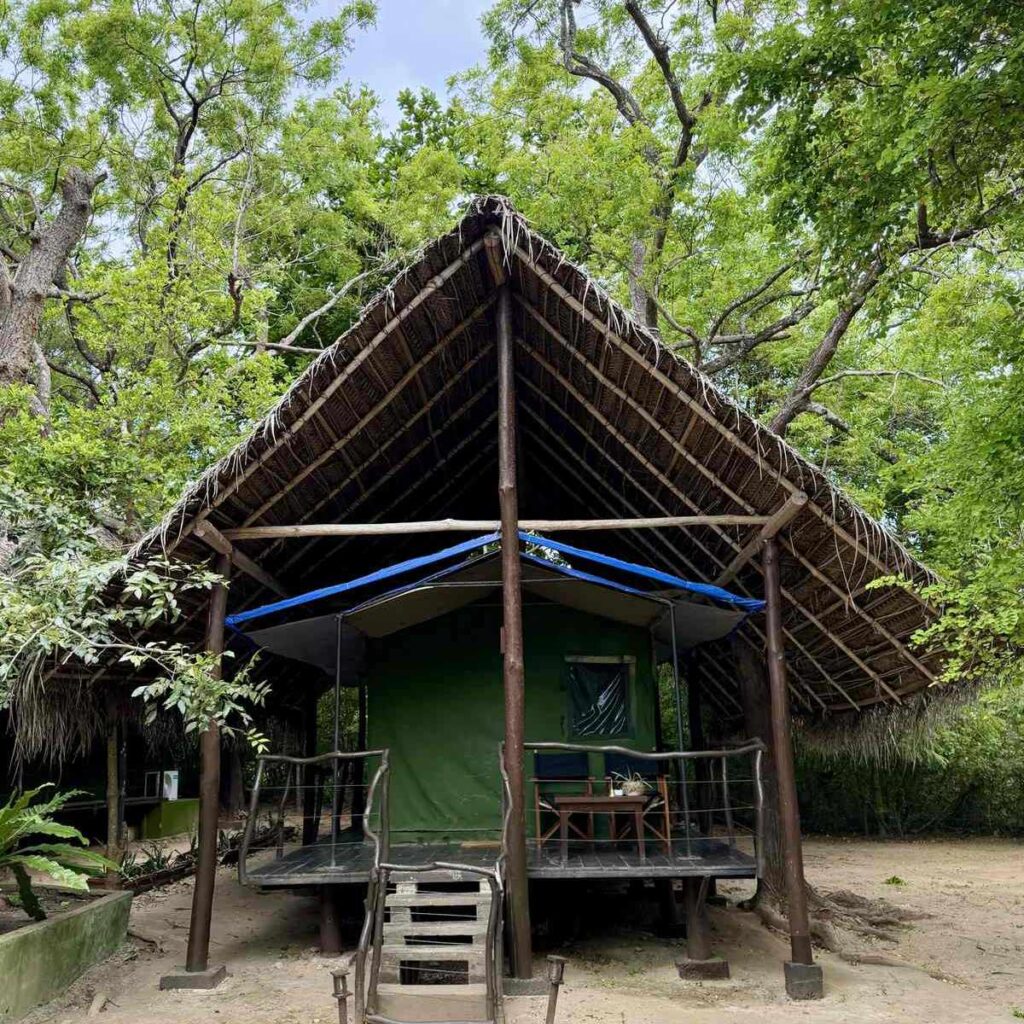
Camp Leopard is the opposite of all of that in the best possible way. Three tents and a single A-frame cabin, that’s the entire property. It’s about a 20-minute drive from the park entrance, the service is genuinely personal in a way a 42-room resort simply can’t replicate, and the food was some of the best Sri Lankan cooking we had on the entire trip.
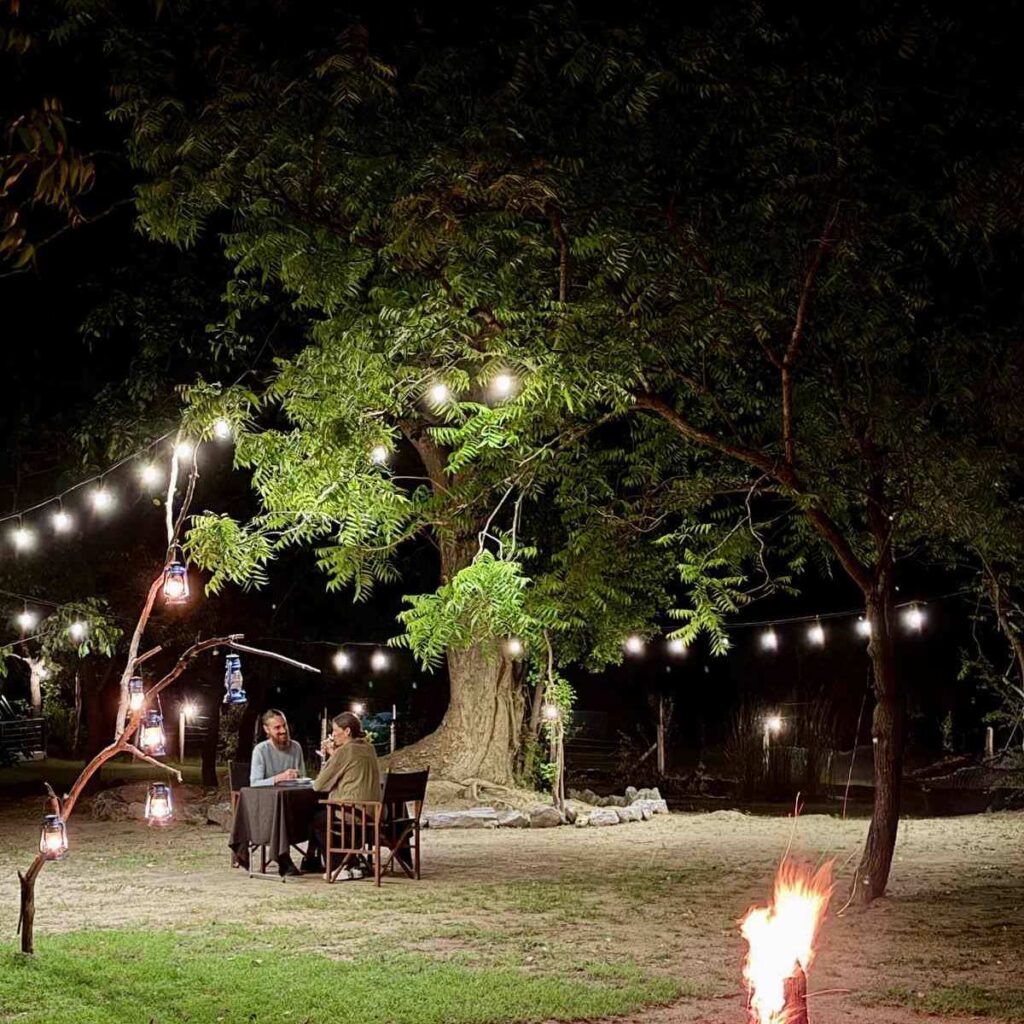
There’s no buffet, no menu of western options. Just fresh, local food made specifically for you. When the property only has a handful of guests at a time, everything gets dialed in: the drives, the meals, the timing. That’s the version of Yala we wanted.
Safari Costs
Let’s get to the numbers: what does a safari in Yala actually cost? For our stay at Camp Leopard, the total cost was $305 per night, meaning our 2-night stay cost $610 total. This included a full day safari, all meals, and the $73 entrance fee into the park for two people (the entrance fee is mandatory for everyone!)
What’s Included in a Full-Board Safari Package?
This is exactly what our $305/night covered:
- Accommodations: Glamping tent with double sized bed, A/C, porch and hot shower
- All Meals: Two dinners under the stars, breakfast, lunch, a snack inside the park on safari, and a large lunch before we left
- Safari Drives: 2 game drives, one in the morning and one in the evening. This was in a private jeep with our guide, tracker, and driver. We opted for 1 full day game drive, but in 2 nights it was possible to add 2 more half day game drives for additional fees
- The Logistics: Vehicle transfer was not included in this price, but again was available to be arranged for an additional fee
Tipping Guide
Tipping in Sri Lanka is customary and highly appreciated, especially in the safari industry where the staff works incredibly long hours. While the amounts are listed below in USD, we tipped everyone in Sri Lankan Rupees. Here is the guideline we followed:
- Naturalist (guide): $10 USD per safari day. Our naturalist worked directly for the lodge and stayed with us for the full day of safari. We tipped him in a lump sum at the end of our stay.
- Jeep Driver & Tracker: $7 USD per safari day. We had a tracker that was looking for signs of animals and a driver navigating the park
- Lodge Staff: $10 USD per night. Our lodge had a communal tipping box for the housekeepers, chefs, and gardeners. We tipped at the end of our stay.
- Transfer Driver: $5 USD per trip. We tipped our driver after the journey from Arugam Bay, and again on the way back to Colombo.
Wildlife and the Safari Experience
Safari Schedule
To see the animals, you have to be at the gates before the sun. Here was our exact 3 day itinerary. It’s helpful to know that we could’ve arrived earlier to the camp on Day 1 and had lunch and gone on additional game drives during the afternoon of Day 1 and the morning of Day 3:
Day 1: Arrival
- 7:00pm: Arrive at the lodge, check in and freshen up
- 8:00pm: Dinner under the stars
- 10:00pm: Early bedtime for an early morning the following day
Day 2: The Full Safari Day
- 5:00am: Meet in the guest lounge for coffee
- 6:00am: Enter the park for morning drive
- 9:00am: Breakfast in the park, eaten in the jeep
- 12:00 – 2:00pm: Lunch & time for relaxing (the park is closed during these hours and we ate at the park restaurant and relaxed there until the park reopened)
- 2:00pm: Afternoon game drive
- 6:00pm: Park closes, strict time otherwise company can be fined, return to lodge
Day 3: Departure
- 9:00am: Breakfast
- 10:00-12:00pm: Free time to relax in the camp
- 12:00pm: Lunch
- 1:00pm: Check out and begin drive back to Colombo
Tracking the Leopard
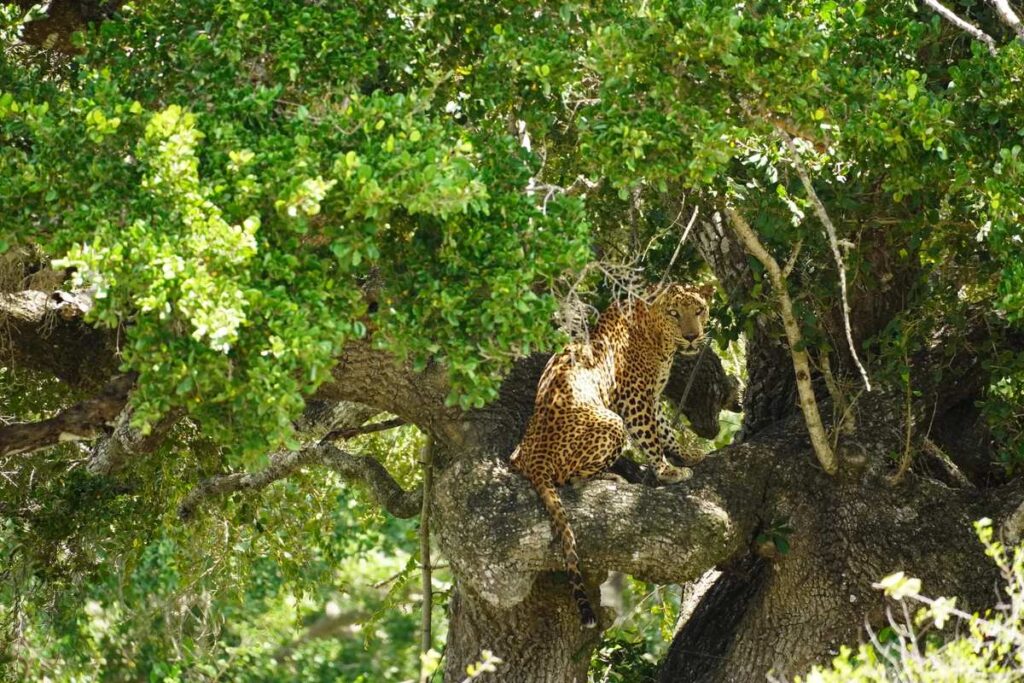
Going on a safari drive in Yala is definitely NOT a zoo experience. It requires a lot of patience and often involves driving through dense scrub without a single sighting. Across our full day of safari driving, we had 3 leopard sightings, and this was the same leopard in the same tree multiple times.
Our guide spotted tracks in the sandy roads, as well as communicated with the other guides and our tracker to figure out where the leopards would be. In our vehicle, we had a guide with us, a tracker in the front seat, and a driver, which is more people than we’ve ever had working on our team on a safari drive!
Other Animals to See
Even when you aren’t spotting leopards, the park is alive with wildlife. We were able to see:
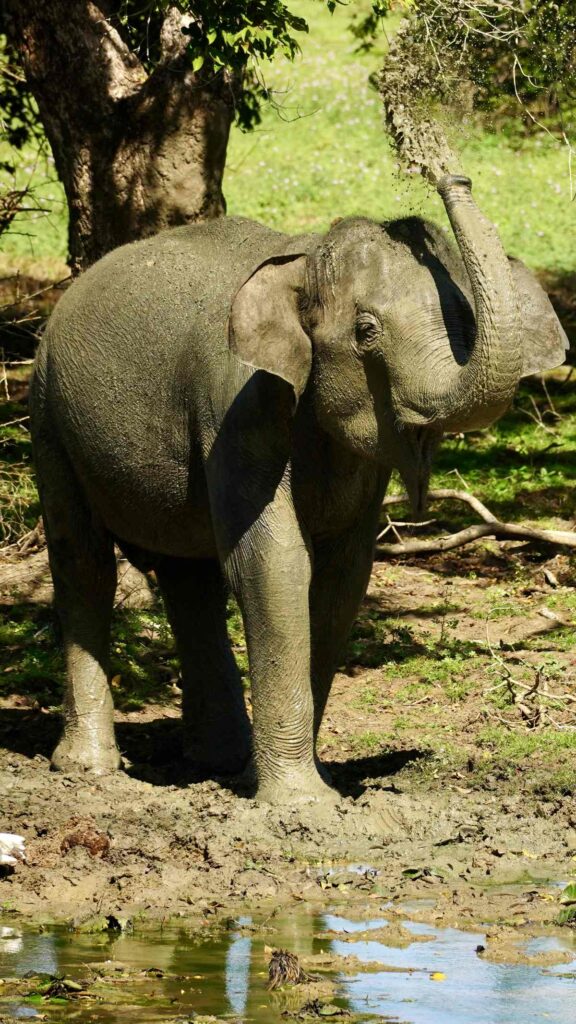
- Elephants: They are much smaller and very few of them have tusks, much different than African elephants
- Sloth Bears: We spent all afternoon looking for one but were unable to see one, they are very elusive and shy animals
- Mugger Crocodiles: A handful of these were spotted around the lagoons in the park, such a prehistoric looking creature
- Spotted Deer: So many spotted deer! We probably saw hundreds of these throughout our day
- Land Monitor: Another interesting prehistoric looking lizard, we saw a few of these crawling up trees and relaxing in the shade
- Birds: Many different eagles, hornbills, peacocks and other very colorful birds
There are many different animals in the park, though many are incredibly shy and tough to spot with the dense brush.
Safari Gear List
Having a DSLR or mirrorless camera with a high-quality zoom lens is essentially a requirement if you want to capture your sightings. We also shoot lots of videos and photos on our phones, (iPhone 17 Pro Max + Google Pixel 10 XL) but because the guides aren’t able to drive off-road, having a long lens camera is strongly recommended.
Our exact camera setup for this trip included:
- Sony a6400 Camera The backbone of our professional shots.
- Sony E 70-350mm Lens Essential for capturing tigers and other animals from a distance.
Safari Packing List: Clothing and Practical Extras
Beyond the cameras, staying comfortable during the hot safari drives is all about having the right essentials in your bag.
- Safari-Ready Clothing: Opt for neutral tones like khaki, olive, and tan to blend into the environment. We recommend light, breathable fabrics, but make sure to pack layers because the jungle is surprisingly chilly before the sun comes up! This is our list of our favorite safari apparel.
- Sunscreen: By 7:30am the sun was out in full force, so having a bottle of sunscreen handy to re-apply throughout the day does wonders. We love this 30 SPF oil-free Neutrogena sunscreen but any small bottle will do!
- Portable Power: There are no plugs in the safari vehicles and long drives will drain your camera batteries fast. We carry a this high-powered portable charger to ensure we never miss a sighting because of a dead battery.
- Binoculars: Not every sighting happens right next to the jeep. We love these binoculars because they offer incredible clarity and quality without breaking the bank.
Is a Yala Safari Worth It?
If you’re looking for a raw, authentic wildlife experience with a real shot at seeing one of nature’s most elusive big cats in its natural habitat then yes, absolutely. I would make sure to book deeper into the dry season as we went when things were still pretty green and the visibility was tough (high season is December). Just remember to:
- Set Expectations Accordingly: Yes there are leopards but they like to lounge in tall trees and jeeps can’t off road here so you’ll need your high zoom lenses
- The Gear: Bring your safari clothes and high zoom cameras, for the animals that are far away in the bush
- The Vibe: Choose a boutique lodge like Camp Leopard if you want a stay that feels personal, stress-free, and connected to the environment.
Planning more wildlife experiences in Asia?
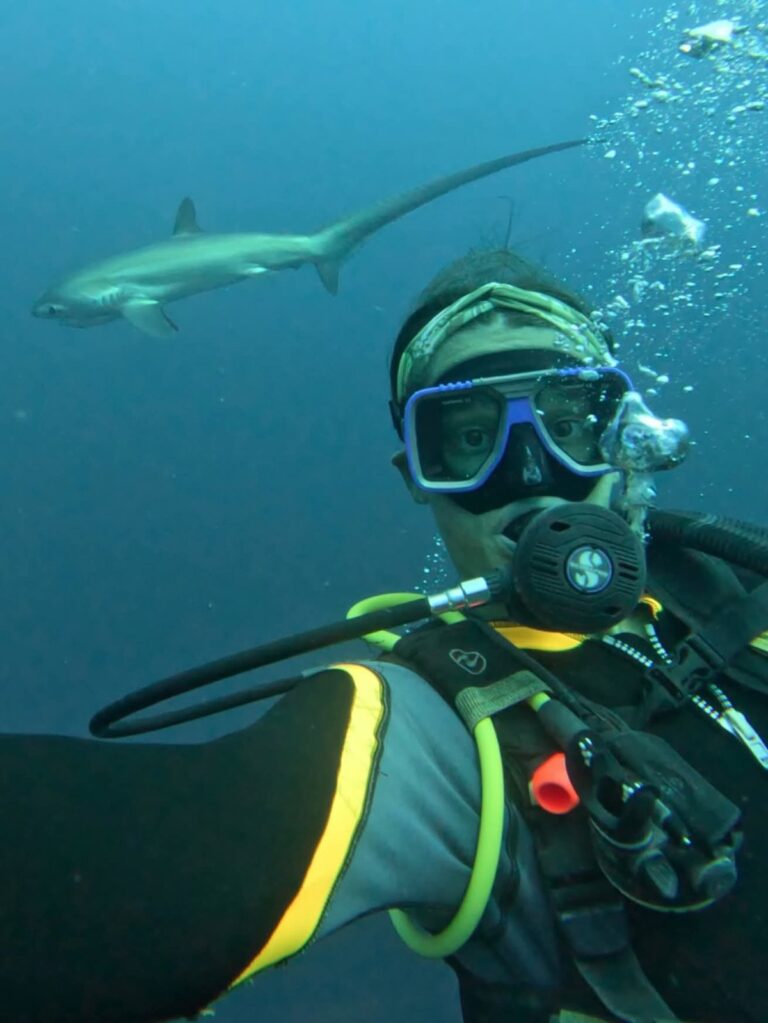
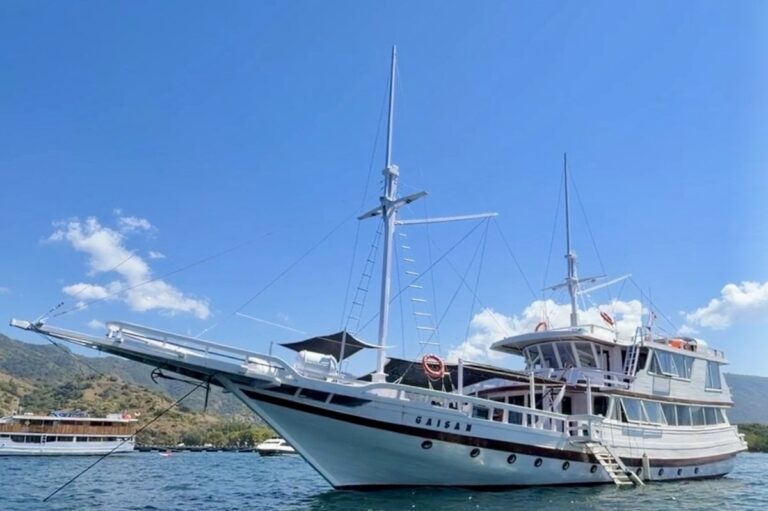
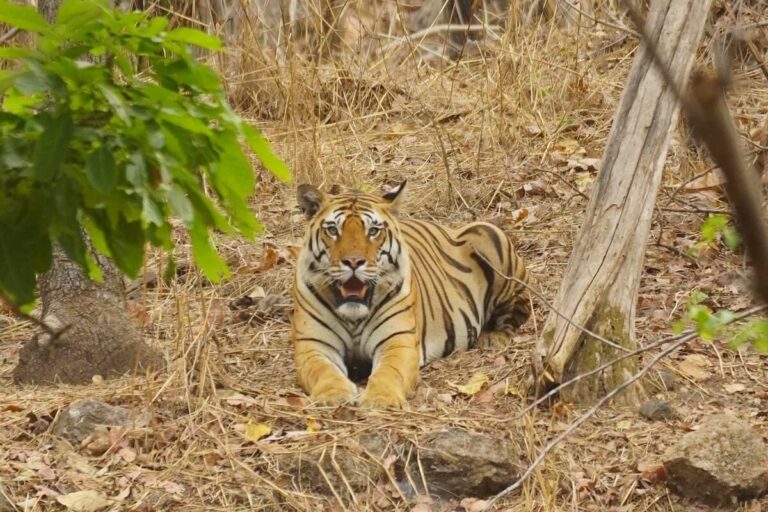
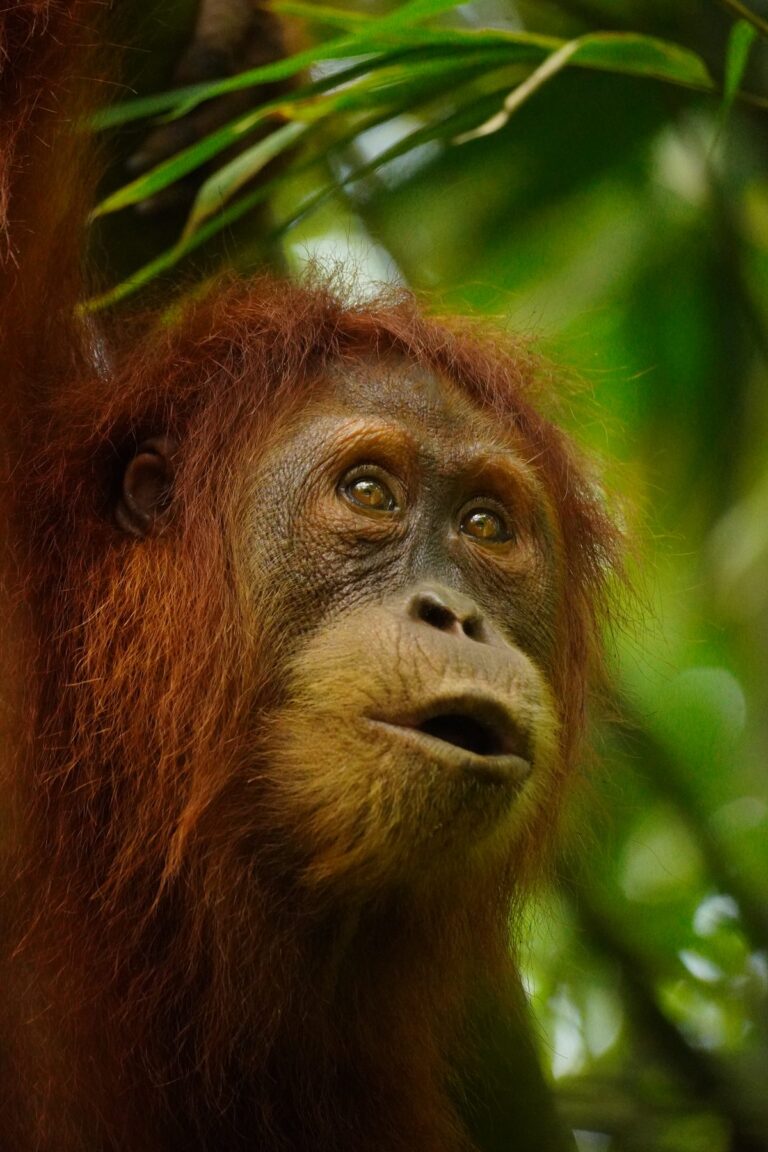
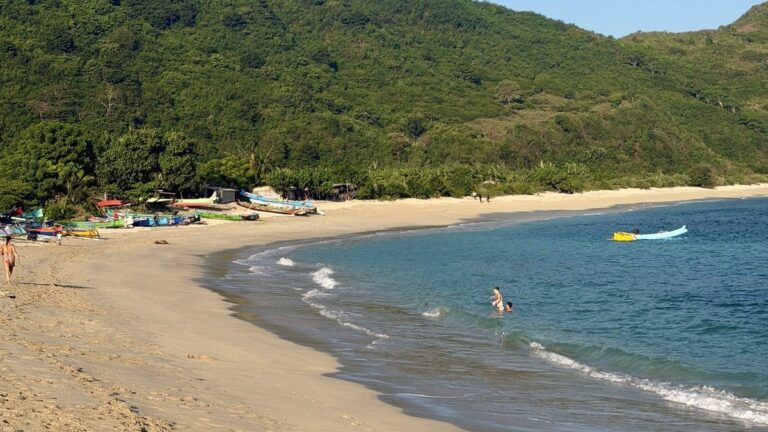
Don’t miss our guides to shark diving in the Philippines, tiger safari in India, orangutan trekking in Sumatra and Komodo liveaboard in Indonesia.
Have questions about planning your trip to Yala? Drop us a message or find us on Instagram @CheckedOutToCheckIn for more information about all of our travels around the world!
P.S. – This post contains affiliate links for the gear and lodges we love. If you make a purchase or book directly through these links, we may earn a small commission at no extra cost to you. This helps us keep the blog running! 🙂
6 Comments